

Drink Spiking Protection for Venues: A 2026 Guide
Table of Contents
- What Is Drink Spiking and Why Venues Must Act
- Legal Responsibilities and Duty of Care for Venue Owners
- How to Stock Drink Safety Products for Bars
- Bar Staff Training for Drink Spiking Prevention
- Implementing a Drink Spiking Prevention Policy for Venues
- Patron Safety Tools and Best Practices
- Cost-Benefit Analysis and Sustainability Considerations
- Conclusion
Last Updated: August 23, 2026
What Is Drink Spiking and Why Venues Must Act
Drink spiking is adding drugs or substances to someone's beverage without their knowledge or consent. Common substances include GHB, ketamine, and other amine-based compounds that render a person incapacitated, vulnerable to theft, sexual assault, or other harm (the CDC). For venue managers, drink spiking protection isn't optional, it's fundamental duty of care.

Patrons expect to enjoy nights out safely, yet drink spiking remains a persistent threat in licensed venues. When a spike occurs, consequences extend beyond the victim: venues face legal liability, reputational damage, and moral responsibility for failing to protect someone in their care.
Venues that implement strong prevention policies, stock protective equipment, and train staff to recognise suspicious behaviour create environments where patrons feel genuinely safer. This investment is both ethical and practical risk management.
Effective drink spiking protection requires three elements: physical barriers (drink covers), staff awareness and training, and clear incident protocols.
Legal Responsibilities and Duty of Care for Venue Owners
Licensed venue operators have a legal duty of care toward patrons that extends beyond serving alcohol responsibly, it includes protecting customers from foreseeable harm, including drink spiking (the American Dental Association). While specific requirements vary by state and territory, the underlying principle is consistent: venues must take reasonable steps to prevent harm on their premises.
Regulators increasingly expect venues to demonstrate patron safety protocols, staff training, and incident reporting procedures. A venue documenting these efforts is far better positioned legally than one that has done nothing.
Venues failing to implement reasonable drink spiking prevention measures may face:
- Regulatory sanctions or licence conditions imposed by liquor authorities
- Civil liability claims from affected patrons
- Reputational damage affecting customer numbers
- Potential criminal liability in serious cases
Documentation matters enormously. Keep records of staff training sessions, dates when drink covers were stocked, and any incidents reported. These records demonstrate good faith effort and provide critical evidence if legal challenges arise.
Courts examining a spiking incident will ask: did this venue take reasonable precautions? Did they train staff? Did they provide protective equipment? Did they respond appropriately when an incident was reported? A venue's duty of care is separate from the individual criminal responsibility of whoever spiked the drink.
How to Stock Drink Safety Products for Bars
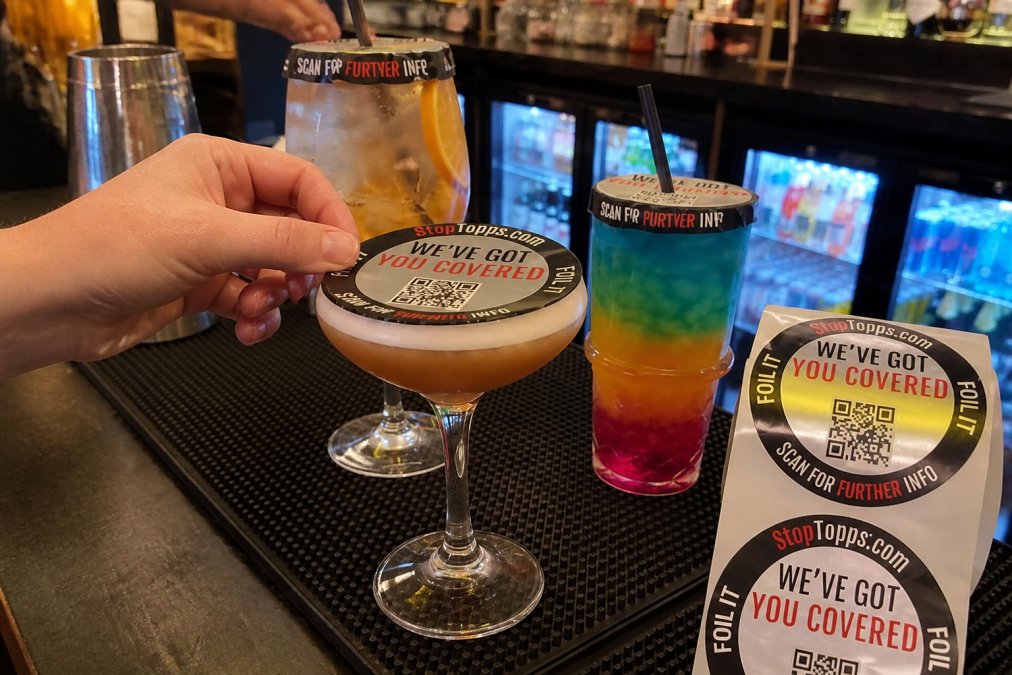
Protective drink covers are the foundation of effective drink spiking prevention. When selecting covers, prioritise food and hygiene approval, fit range (up to 100mm diameter), ease of application, visibility, and cost-effectiveness.
Safer Sips offers multiple stocking options. The StopTopp® 10 Pack ($20.00) suits individual patrons or small groups. The StopTopp® 25 Pack ($35.00) provides enough covers for a typical Friday or Saturday night and is ideal for testing adoption rates. High-volume venues should consider the StopTopp® 100 Party Pack ($55.00) or StopTopp® 500 on a roll ($269.00). The roll format significantly reduces application time during peak service.

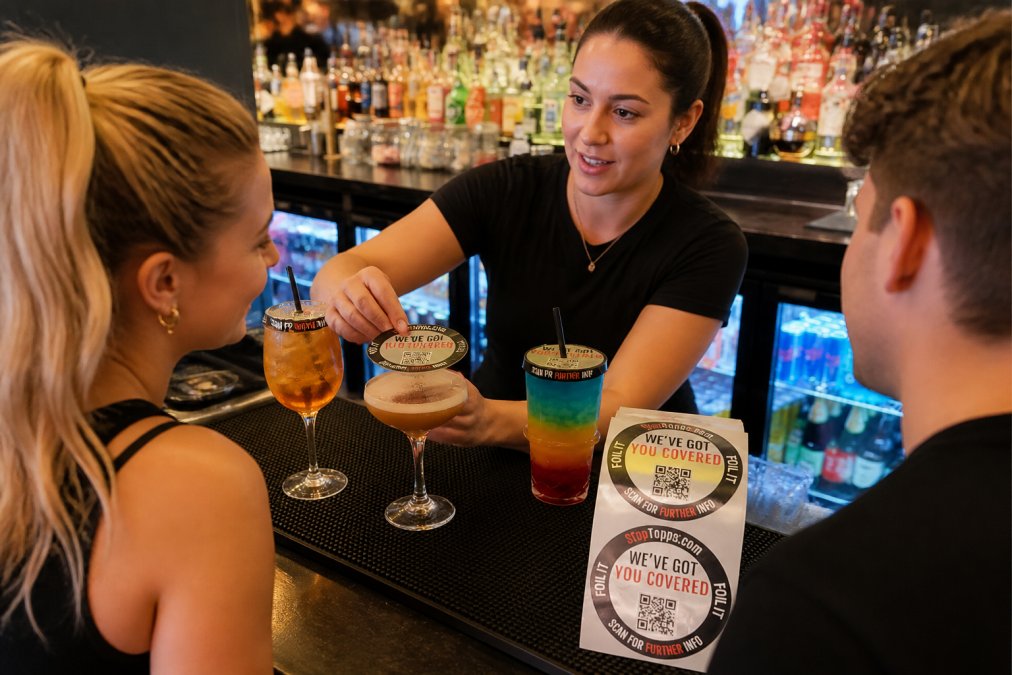
Stock levels should reflect peak customer volume, maintain at least 1.5 covers per expected customer during your busiest service period. Store covers in accessible locations behind the bar and at service points. Train staff to proactively offer covers to customers; normalising them as standard practice removes stigma and increases uptake.
Bar Staff Training for Drink Spiking Prevention
Staff training is the backbone of effective drink spiking prevention. Your team must understand the threat, recognise warning signs, apply protective equipment correctly, and know how to respond if an incident occurs.
A comprehensive training curriculum should cover:
Recognition and awareness: Common symptoms include sudden drowsiness, confusion, memory gaps, slurred speech, loss of coordination, and nausea (peer-reviewed research). Substances commonly used are GHB and ketamine. Spiking often occurs when a patron leaves their drink unattended or accepts a drink from an unfamiliar source.
Protective equipment training: Correct application of drink covers, when to offer them, checking proper sealing, and explaining their purpose as standard safety practice.
Incident recognition and response: Identifying customers who may have been spiked, immediate steps (move to safe area, alert management, call emergency services if needed, preserve the drink), documentation, and support for the affected person.
Bystander intervention: How to safely intervene if you notice suspicious behaviour, approaching without escalating conflict, alerting management discreetly, and supporting other staff.
Train all staff during onboarding and refresh annually. Document all training sessions with dates and attendee names. Use real scenarios: "A customer leaves their drink to use the toilet. What do you do?" or "You notice a customer becoming unusually drowsy after one drink. What's your next step?"
The goal is building a culture where staff recognise drink spiking as a real threat and know exactly how to respond.
Implementing a Drink Spiking Prevention Policy for Venues
A formal written policy gives your team clear guidelines and demonstrates to regulators that you take patron safety seriously. Your policy should be reviewed annually and accessible to all staff.
Your policy should include:
Patron communication: How your venue informs customers about risks and protections, signage in toilets and near bars, staff scripts for offering covers, and information about what to do if someone suspects spiking.
Protective measures: Stocking and application of drink covers, availability of testing strips (if offered), lighting standards, and CCTV coverage (if applicable).
Staff responsibilities: Duty to offer covers, monitoring for suspicious behaviour, responding to incidents, and recording concerns.
Incident response: Immediate steps when spiking is suspected, who to contact, how to preserve evidence, support for the affected person, and follow-up documentation.
Training and accountability: Frequency of staff training (minimum annually), induction for new staff, consequences for non-compliance, and policy review schedule.
Post your policy visibly in staff areas and include a summary in your staff handbook. Communicate your commitment to patrons on your website, social media, and promotional materials. Customers increasingly choose venues where they feel safe.
Patron Safety Tools and Best Practices
Beyond drink covers, comprehensive patron safety includes education, awareness tools, and clear response protocols.
Detection and testing options:
The Drink Spiking Test Wristband from Safer Sips ($18.00 per band with 2 tests) allows individuals to test their drink within seconds for GHB, ketamine, and other amine-based drugs. These wristbands are particularly useful for festivals, events, high-risk environments, and venues catering to younger customer groups.
Best practices for patrons:
- Never leave your drink unattended
- Accept drinks only from trusted people or watch them being made
- Use a drink cover or keep your hand over your glass
- Stick with friends and check in regularly
- Alert staff immediately if you feel unusually drowsy or confused
- Trust your instincts
Creating a culture of active bystander intervention:
Encourage customers to look out for each other. Train staff to recognise when someone may need help and intervene discreetly. Make clear that reporting suspicious behaviour is encouraged and will be taken seriously.
Cost-Benefit Analysis and Sustainability Considerations
Implementing drink spiking prevention requires upfront investment, but risk mitigation, patron trust, and regulatory compliance justify the cost.
Direct costs:
- Drink covers: $0.07-0.15 per unit
- Staff training: 1-2 hours per employee annually
- Detection strips or wristbands: $8-20 per unit (if offered)
- Signage and materials: minimal if designed in-house
- Documentation systems: minimal if using existing tools
For a mid-sized venue serving 300 customers weekly, stocking covers costs roughly $20-30 per week, or $1,000-1,500 annually. This is negligible compared to potential liability costs if an incident occurs without preventive measures.
Indirect benefits:
- Reduced legal and regulatory risk
- Enhanced reputation and customer loyalty
- Competitive advantage
- Improved staff morale and retention
- Potential insurance premium reductions
Sustainability considerations:
StopTopp® covers are made from food-safe foil and can be recycled with other aluminium waste. Wristbands are reusable and minimise waste. Ensure staff understand proper disposal of used strips.
| Cost Element | Estimated Annual Cost | Benefit |
|---|---|---|
| Drink covers (300 customers/week) | $1,000-1,500 | Prevents spiking, reduces liability |
| Staff training (8-10 staff, 1.5 hours each) | $200-400 | Ensures proper incident response |
| Testing strips (if offered) | $500-1,000 | Gives patrons peace of mind |
| Signage and materials | $100-300 | Communicates commitment to safety |
| Total Annual Investment | $1,800-3,200 | Significant risk mitigation and reputation benefit |
For most venues, this investment is modest relative to the protection it provides.
Drink spiking is preventable. Venues combining physical protection (drink covers), staff training, and clear policies create environments where patrons genuinely feel safer. Regulators and courts view venues that have taken proactive steps far more favourably than those that haven't.
Safer Sips has developed science-backed tools and guidance to help venues protect their customers. Our independently tested drink covers and detection strips give patrons real peace of mind, and our training resources help staff recognise and respond to threats effectively. Shop Drink Covers and start building a safer venue today.
Frequently Asked Questions
Q: What is drink spiking and how common is it in venues?
A: Drink spiking occurs when someone adds a substance to another person's drink without their knowledge or consent, typically to incapacitate them. It remains a serious concern in hospitality settings. Venues have a duty of care to implement protective measures, including physical barriers and staff awareness, to reduce risk and create safer environments for patrons.
Q: How effective are drink covers and detection strips at preventing spiking?
A: Drink covers act as a physical deterrent and tamper-evident barrier, making it harder for someone to add substances undetected. Detection strips can identify the presence of common spiking drugs like GHB and Ketamine within seconds. When combined as part of a comprehensive venue safety strategy, alongside staff training and incident reporting protocols, these tools significantly reduce vulnerability and provide patrons with active protection.
Q: What is the cost of stocking drink protection products for a bar?
A: Costs vary by venue size and usage. A 25-pack of drink covers costs $35.00, while a 100-pack is $55.00, suitable for smaller venues or events. Larger establishments can invest in bulk options like the 500-pack at $269.00. Detection wristbands with test strips cost $18.00 per band. When calculated per patron night, these represent a modest investment in duty of care compliance and risk mitigation.
Q: What training should bar staff receive to prevent drink spiking?
A: Staff should be trained to recognise suspicious behaviour, understand their venue's safety protocols, and know how to respond to patron concerns. Training should cover how to use and distribute drink covers, how to spot signs of intoxication beyond normal alcohol consumption, incident documentation procedures, and how to contact emergency services. Regular refresher training ensures staff remain vigilant and confident in their response.
Q: What legal responsibilities do venue owners have regarding drink spiking?
A: Venue owners have a duty of care under occupiers' liability and public health legislation to provide a reasonably safe environment. This includes implementing harm reduction measures, training staff, maintaining incident records, and cooperating with law enforcement. Compliance demonstrates social responsibility and reduces legal exposure. Documenting your safety protocols and staff training provides evidence of good faith risk management.
Q: How can a venue integrate drink protection into existing security protocols?
A: Drink spiking prevention works best alongside CCTV monitoring, ID checks, and active staff presence. Position drink covers and detection tools at entry points or at the bar. Train staff to observe patron behaviour and intervene if someone appears unusually intoxicated. Link incident reporting to your existing security log system. This integrated approach creates multiple layers of protection rather than relying on any single measure.
This article was written using GrandRanker