

How to Stop Drink Spiking: A 2026 Guide
Table of Contents
- What Is Drink Spiking and Why It Happens
- Signs of Drink Spiking to Recognise Immediately
- How Drink Spiking Detection Strips Work
- How to Stop Drink Spiking Before It Happens
- What to Do If Your Drink Is Spiked
- Psychological Aftercare and Trauma Support
- Conclusion
Last Updated: August 20, 2026
What Is Drink Spiking and Why It Happens
Drink spiking is the act of adding alcohol or drugs to another person's beverage without their knowledge or consent. It is a serious criminal offence under Australian law, and it occurs across many social settings: bars, nightclubs, festivals, house parties, and even workplaces. The substances used are chosen precisely because they are difficult to detect by taste or smell, and they act quickly once consumed.
At Safer Sips, we work with people who have experienced this firsthand or who want to make sure they never do. The reality is that drink spiking is not a rare, isolated problem. It affects people across age groups and genders, though young adults in social nightlife environments face a disproportionate level of risk.
Why does it happen? The motivations vary. Some perpetrators spike drinks to facilitate drug-facilitated sexual assault. Others do it as a so-called "prank," which is no less dangerous and equally illegal. In every case, the person being spiked loses control over their own physical and cognitive state without agreeing to it.
Drink spiking is defined as the deliberate addition of a substance to a person's drink without their knowledge, with the intent to impair their judgement, consciousness, or physical capacity. Understanding this definition matters because it shifts the framing: this is not about carelessness on the victim's part. It is a premeditated act against someone's autonomy.
According to the Australian Institute of Criminology's research on drug-facilitated crime, drink spiking incidents are likely under-reported due to memory loss and uncertainty about what occurred. That gap between reported cases and actual incidence is exactly why prevention matters more than reaction.
Signs of Drink Spiking to Recognise Immediately
Recognising the signs of drink spiking quickly can be the difference between getting to safety and becoming seriously vulnerable. The challenge is that many symptoms overlap with ordinary alcohol intoxication, which is precisely what makes spiking so insidious.
Physical Symptoms That Come On Fast
The most common physical symptoms include sudden and severe dizziness, nausea, muscle weakness, confusion, and impaired coordination. Some people experience blurred vision, difficulty speaking, or a rapid drop in consciousness. These symptoms can appear within minutes of consuming a spiked drink, particularly with substances like GHB or ketamine.
The key distinction is speed and severity. A person who has had two drinks and suddenly cannot stand, slurs heavily, or loses track of where they are has likely been spiked, not simply had too much to drink.
When Symptoms Don't Match Alcohol Consumed
This is the clearest warning sign: when the level of impairment is completely inconsistent with the amount of alcohol a person has consumed.
Watch for:
- Sudden blackout or memory loss with no clear cause
- Extreme sedation after a small number of drinks
- Feeling physically paralysed or unable to move normally
- Unexplained gaps in memory when recounting the evening
- Waking up in an unknown location with no recollection of how you got there
If you or someone nearby shows these signs, treat it as a medical emergency. Do not wait to be certain. Act immediately.
How Drink Spiking Detection Strips Work
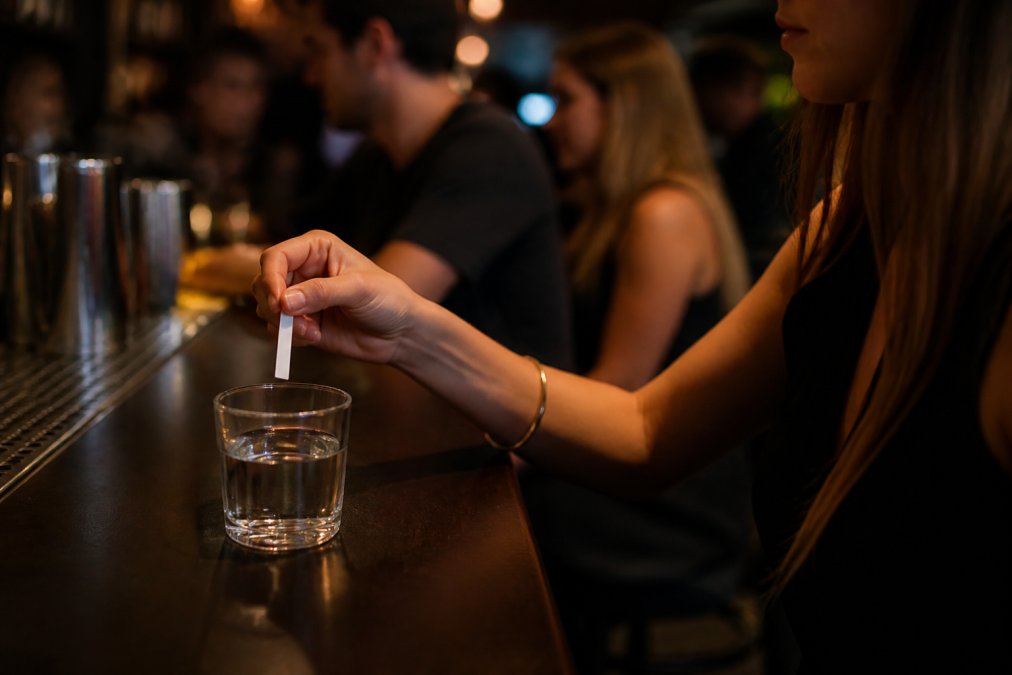
Drink spiking detection strips are one of the most practical tools available for identifying whether a substance has been added to a drink. Each strip contains a chemical reagent that reacts when it comes into contact with specific compounds, producing a visible colour change that indicates the presence of a spiking substance.
Safer Sips detection strips are independently tested by accredited laboratories and universities, with a 99% accuracy rate and a 97% detection rate across more than 650 amine-based compounds. That level of precision matters when a false negative could put someone in danger.
What Substances They Detect
The primary substances targeted by quality detection strips are GHB and ketamine, two of the most commonly used spiking agents. Both are colourless, nearly tasteless, and act as potent sedatives at relatively low doses.
Beyond GHB and ketamine, Safer Sips strips are developed to detect a broad range of amine-based drugs, covering more than 650 compounds. This matters because perpetrators do not always use the same substance, and having broader detection coverage reduces blind spots.
How to Use Detection Strips Discreetly
Using detection strips does not have to be conspicuous. The process is designed to be fast and unobtrusive.
- Remove the strip from its packaging before you enter the venue, or do so discreetly in your bag.
- Dip the a straw into your drink and drop onto the test strip. Wait for the recommended contact time (typically a few seconds).
- Observe the colour change result within the specified window, usually under 30 seconds.
- A positive result means a reactive substance has been detected. Do not consume the drink.
- If you are uncertain about the result, treat it as a positive and act accordingly.
The entire process can be done at a table without drawing attention. Most people nearby will not notice, and those who do will see nothing more than someone checking their drink.
How to Stop Drink Spiking Before It Happens
Prevention is always more effective than response. The good news is that most drink spiking incidents rely on a window of opportunity: an unattended drink, a distracted group, or a moment of misplaced trust. Closing those windows significantly reduces risk.
Protective Drink Covers and Tamper-Evident Options
Drink covers are physical barriers placed over the top of a glass or bottle to prevent anything being added without your knowledge. They serve two purposes: they physically block access to the drink, and they act as a visible deterrent.
Silicone stretch covers, scrunchie-style toppers, and hard plastic lids are all common formats. The best options are tamper-evident, meaning they show visible signs of interference if someone has attempted to access the drink beneath them.
Key features to look for in a drink cover:
- Snug fit across a range of glass sizes
- Tamper-evident design or locking mechanism
- Discreet appearance that does not draw unnecessary attention
- Reusable and easy to carry
Safer Sips drink covers are designed with these criteria in mind, offering a practical layer of protection that works alongside detection strips rather than replacing them.

Bystander Intervention and the Trusted Person System
One of the most underutilised protective strategies is the trusted person system. Before a night out, nominate one person in your group whose role is to stay aware of the group's state throughout the evening. This person watches for signs of unexpected intoxication, keeps track of who has consumed what, and is the designated contact point if something goes wrong.
Bystander intervention training takes this further. Research from the Australian Human Rights Commission's resources on sexual harassment and assault prevention highlights that bystanders who feel confident and prepared to act are significantly more likely to intervene safely when they witness a concerning situation.
Practical bystander actions include:
- Checking in with someone who appears more intoxicated than expected
- Alerting venue security if you see someone adding something to a drink
- Staying with a friend who is showing signs of impairment until they are safely home
- Using the "Ask for Angela" scheme, available at many licensed venues, to discreetly signal that you need help
Protective Strategy |
Best For |
Key Benefit |
|---|---|---|
Detection strips |
Testing drinks before consumption |
Identifies spiking substances in seconds |
Drink covers |
Unattended or crowded settings |
Physical barrier and visual deterrent |
Trusted person system |
Group nights out |
Ensures someone is always monitoring the group |
Bystander intervention |
Public venues |
Early identification and response |
Venue security engagement |
Nightclubs and bars |
Immediate professional response |
What to Do If Your Drink Is Spiked
Speed matters. The substances used in drink spiking metabolise quickly, which means the window for forensic evidence collection is narrow. Acting fast on multiple fronts simultaneously is the right approach.
Preserving Forensic Evidence
Forensic evidence is the foundation of any successful prosecution. Without it, establishing that spiking occurred becomes significantly harder.
If you suspect your drink has been spiked:
- Do not discard the drink. Seal it if possible, or ask someone you trust to hold it. The liquid itself is evidence.
- Request a urine sample collection as soon as possible. Many spiking substances are detectable in urine for only a few hours. Toxicology screening conducted at a hospital within this window is critical.
- Do not shower, change clothes, or eat and drink excessively before being examined by medical staff. These actions can compromise physical evidence.
- Note the time you last consumed the drink and when symptoms began. This timeline supports forensic analysis.
- Keep any packaging from drinks you received, including bottles or cans, as these may carry fingerprints or other trace evidence.
According to the Queensland Health guidance on drug-facilitated sexual assault, early hospital admission is the single most important step for both medical care and evidence preservation.
Reporting to Police and Venue Security
Report the incident to venue security first, while you are still on the premises. Ask them to preserve CCTV footage from the area where you were seated. Footage is often overwritten within 24-48 hours, so this request needs to be made quickly.
File a formal report with police as soon as you are medically stable. You do not need to be certain that spiking occurred to make a report. Provide the police with:
- The sealed drink, if you retained it
- The time and location of the incident
- A description of anyone who had access to your drink
- Your toxicology results from the hospital
Drink spiking is a criminal offence in every Australian state and territory. Perpetrators can face serious charges under assault, poisoning, and drug-related legislation. Reporting gives authorities the information they need to investigate and potentially prevent future incidents.
Psychological Aftercare and Trauma Support
Most guides on drink spiking stop at the practical steps. This one does not.
Being spiked is a violation of bodily autonomy. Even when no physical assault occurs, the experience of losing control of your own consciousness without consent can leave lasting psychological effects: anxiety in social settings, hypervigilance, difficulty trusting others, and symptoms consistent with post-traumatic stress.
These responses are normal. They are not a sign of weakness or overreaction. They are the mind's attempt to process an experience in which it had no say.
Practical steps for psychological recovery:
- Talk to someone you trust about what happened, even if you are uncertain about the details. Isolation makes recovery harder.
- Contact a trauma-informed counsellor or psychologist. Many practitioners specialise in assault and drug-facilitated trauma. Your GP can provide a referral, and a Mental Health Care Plan under Medicare may reduce the cost of sessions.
- Reach out to 1800RESPECT (1800 737 732), the national sexual assault and domestic violence counselling service, which provides 24-hour support.
- Allow yourself time. Recovery from trauma is not linear. Some people feel fine quickly; others find symptoms emerge weeks later.
The social dimension matters too. Friends and family who want to help should resist the urge to ask probing questions about what happened. The most useful thing a support person can do is be present, consistent, and non-judgemental.
For venue managers, creating a safe space protocol means more than calling an ambulance. It means having trained staff who know how to support a patron who has been spiked with sensitivity and without stigma, and directing them to appropriate aftercare resources before they leave the premises.
As the Blue Knot Foundation's guidance on trauma-informed support outlines, trauma-informed responses prioritise the person's sense of safety, choice, and control, which are precisely the things that drink spiking removes.
Drink spiking remains a serious safety challenge in social nightlife environments, and the gap between awareness and action is where most people remain vulnerable. Knowing the signs, having the right tools, and understanding what to do in the immediate aftermath can change outcomes significantly. Safer Sips offers independently tested detection strips and tamper-evident drink covers developed over four years with leading researchers, giving you science-backed protection you can use discreetly from the moment you sit down. Shop Drink Covers at Safer Sips and take a practical step toward a safer night out.
Frequently Asked Questions
Are drink spiking detection strips reliable?
High-quality detection strips, independently tested by accredited laboratories, can detect substances like GHB and Ketamine with accuracy rates around 99%. Safer Sips strips are tested across 650+ amine-based compounds and return results in seconds. The key is using them before you drink, not after symptoms appear. No strip replaces common sense precautions, but they add a meaningful, science-backed layer of protection on a night out.
What should I do if I suspect my drink has been spiked?
Stop drinking immediately and tell a trusted person nearby. Ask venue security for help and move to a safe, well-lit area. Call 000 if symptoms are severe. Keep the drink untouched in a sealed container if possible — it is forensic evidence. At hospital, request a urine and blood toxicology screening as soon as possible, since many substances clear the body within 12 hours. Report the incident to police, ideally before leaving the venue.
How can I tell if a drink has been spiked?
Spiked drinks often look and taste normal. Warning signs include sudden dizziness, nausea, confusion, or physical impairment that seems far stronger than the alcohol consumed. Memory loss, difficulty speaking, and blackout episodes are serious indicators. Because symptoms can appear within 15-30 minutes, trust your instincts. If something feels wrong, act immediately — do not wait to see whether it passes.
What are the legal implications of drink spiking?
Drink spiking is a criminal offence under state and territory criminal laws across Australia. Administering a substance to another person without their consent, particularly with intent to commit a further offence such as sexual assault, carries serious penalties including imprisonment. Victims have the right to report to police and access victim support services. Evidence collected early — including toxicology screening and the drink itself — significantly strengthens any legal case.
What is the best way to protect my drink at a festival or club?
Use a tamper-evident drink cover to prevent anyone adding substances to your glass while it is unattended. Pair this with a detection strip test before drinking. Never leave your drink unsupervised, avoid accepting drinks from strangers, and designate a trusted person in your group to watch out for each other. Venue security staff and safe space zones at licensed events are also resources worth identifying when you arrive.
How can I support a friend who may have been spiked?
Stay with them and keep them calm. Do not leave them alone or let them go home with someone they do not know well. If they are losing consciousness, call 000 immediately. Encourage them to seek medical attention for toxicology screening, and support them in reporting to police if they choose to. Afterwards, help them access counselling — services like 1800RESPECT (1800 737 732) offer confidential support for trauma related to drug-facilitated assault.