

Drinksafetech Alternative for Drink Testing: Top Picks
Table of Contents
- Why People Are Looking for a Drinksafetech Alternative for Drink Testing
- How Drink Testing Products Work: Strips, Stickers, and Covers Compared
- Drink Spiking Test Strips Australia: Products Worth Knowing
- Are Drink Test Strips Accurate Enough to Rely On?
- How to Prevent Drink Spiking: A Practical Safety Approach
- Which Drink Testing Option Should You Choose?
- Conclusion
Last Updated: August 20, 2026
Why People Are Looking for a Drinksafetech Alternative for Drink Testing
Drink spiking is a genuine public safety concern, and demand for reliable drink testing products has grown across festivals, bars, and clubs. Many people searching for a drinksafetech alternative find the options confusing, limited, or hard to source locally. The core problem is that drink spiking test kits vary enormously in what they detect, how accurately they detect it, and how practical they are to use in a real social setting.
According to Australian Institute of Health and Welfare's alcohol and drug statistics, substance misuse in social settings remains a persistent concern, with illicit drugs frequently implicated in assault and sexual violence cases. Drink spiking, whether with GHB, ketamine, or other amine-based compounds, sits at the intersection of that harm and personal safety.
This guide covers the main product formats available for drink testing, compares the options worth knowing about, and gives you a framework for choosing the right one.
How Drink Testing Products Work: Strips, Stickers, and Covers Compared
Rapid beverage tests fall into three broad categories, each using a different mechanism and suited to different use cases.
| Format | Detection Method | Reusable? | Substances Detected | Best For |
|---|---|---|---|---|
| Test Strips | Chemical reaction / colour change | No | GHB, Ketamine, 650+ compounds | Broad screening in any setting |
| Sticker Detectors | Colour-changing reagent on adhesive | No | GHB (typically) | Ultra-discreet, rapid spot checks |
| Drink Covers | Physical barrier | Yes | N/A (preventative) | Stopping tampering before it happens |
Test Strips: Drop-Test Method
Test strips work through a chemical reaction triggered when a small drop of liquid is applied to the reactive area. If a target substance is present above the detection threshold, the strip changes colour within seconds. The drop-test method is the most versatile format because it works across both alcoholic and non-alcoholic beverages without special equipment. For best results, follow the timing instructions precisely and apply the correct amount of liquid.
Sticker-Format Detectors
Sticker detectors use the same colour-changing chemistry in an adhesive format designed to attach to a phone case, keychain, or personal item. You apply a drop of your drink and read the result within seconds. The primary advantage is discretion. The limitation is substance coverage: most sticker products screen for GHB only, not the broader range of date rape drugs that test strips cover.
Physical Drink Covers
Drink covers stretch over the rim of a glass to create a physical barrier, stopping anything from being added without your knowledge. They don't detect drugs already in a drink but address the problem at a different point in the risk chain. Used alongside test strips, they form a more complete personal safety kit.
Drink Spiking Test Strips Australia: Products Worth Knowing
The Australian market has a small but growing number of products designed specifically for drink spiking detection.
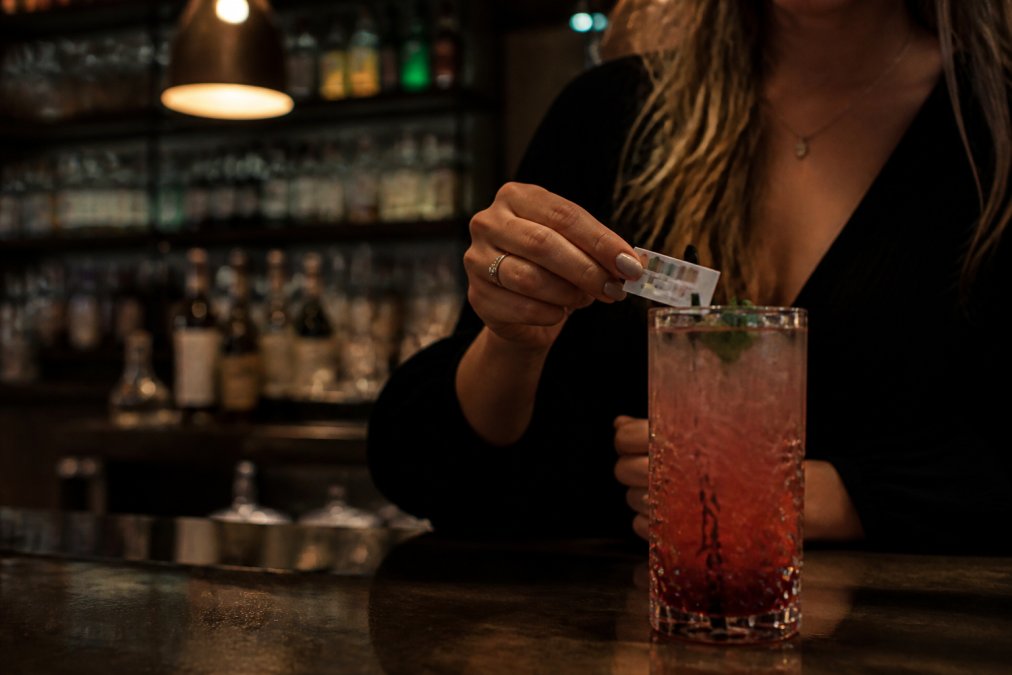
Safer Sips CYD® Detection Strips
Safer Sips CYD® Detection Strips are a strong option for broad-spectrum drink testing with independently verified accuracy. These strips detect GHB and ketamine, the two most frequently used drink-spiking drugs, as well as over 650 other amine-based substances including cocaine, MDMA, scopolamine, and amphetamines.
You apply a drop of your drink to the test areas and read the result within moments. The strips are validated across many alcoholic and non-alcoholic beverages, which is important because the chemistry of the drink itself can interfere with some reagent-based tests.
What sets Safer Sips apart is the depth of independent testing behind the product. The CYD® strips have been tested by accredited laboratories and universities over a four-year development period. The published accuracy rate is 99%, with a 97% detection rate, figures from third-party validation, not marketing claims.
Visit the Safer Sips website for current pricing and pack options.
Pros:
- Detects GHB, ketamine, and 650+ other amine-based compounds
- 99% accuracy, 97% detection rate from independent laboratory testing
- Works across alcoholic and non-alcoholic beverages
Cons:
- Single-use (each strip is used once)
- Detects after the fact, not before
Tutella Drink Guardian Stickers
Tutella's Drink Guardian stickers (by Be Safe As) are adhesive stickers designed to live on your phone case, lipstick, or keyring. You apply a drop of your drink and get a result in as little as five seconds. The format is genuinely discreet, no reaching into a bag for a strip or card. The limitation is coverage: Tutella stickers detect GHB only, not ketamine or the broader range of substances that CYD® strips cover.
Pros:
- Extremely fast results (around 5 seconds)
- Highly discreet, attaches to everyday personal items
- Simple one-drop application
Cons:
- Detects GHB only, not ketamine or other compounds
- Single-use stickers
NightCap® Drink Covers
NightCap® Drink Covers, available through Safer Sips, are reusable fabric covers that stretch over most drink cups and glasses. They create a physical seal that prevents anything from being added to your drink without your knowledge. The scrunchie version doubles as a hair accessory, which is a genuinely discreet carry method.
Unlike detection strips, drink covers don't tell you whether your drink has already been tampered with. They prevent future tampering. The practical use case is: test your drink when it arrives, confirm it's clean, then cover it when you step away. That combination of detection and physical protection is more effective than either approach alone.
Pros:
- Reusable and washable (more sustainable than single-use products)
- Discreet, especially the scrunchie format
- Deters spiking with a visible physical barrier
Cons:
- Does not detect substances already in a drink
- May not fit all container shapes
Are Drink Test Strips Accurate Enough to Rely On?
Drink test strips are accurate enough to be a genuinely useful harm reduction tool, but they are not infallible. Understanding their limitations is as important as knowing what they can detect.
False Positives and False Negatives: What the Data Shows
A false positive occurs when a strip indicates a substance is present when it isn't. A false negative occurs when a substance is present but the strip doesn't detect it. False positives can occur in beverages with high concentrations of certain natural compounds. Some energy drinks and herbal mixers have been known to produce ambiguous readings.
False negatives are the more serious concern from a safety perspective. They can occur when a substance is present below the detection threshold, or when the beverage matrix interferes with the reaction. According to the Therapeutic Goods Administration's guidance on rapid diagnostic tests, no field test should be treated as a substitute for laboratory toxicology analysis.
The practical implication: if your strip shows negative but you feel unwell or notice changes in your perception that don't match what you've consumed, don't dismiss the result as proof you're safe.
Detection Thresholds and Substance Coverage
Detection threshold refers to the minimum concentration of a substance that a test strip can reliably identify. Below that concentration, the strip won't react, even if the substance is present. The broader the substance coverage, the more useful the strip. The Safer Sips CYD® strips address this by covering 650+ amine-based compounds, which is a meaningfully wider net than most alternatives.
How to Prevent Drink Spiking: A Practical Safety Approach
Preventing drink spiking requires combining detection tools with consistent habits and situational awareness. No single measure is complete on its own.

According to the Australian Human Rights Commission's resources on sexual assault prevention, drink spiking is frequently linked to sexual assault and intimate partner violence, making it a harm reduction priority well beyond individual caution.
Discreet Usage Protocols in Bars and Clubs
The most common reason people don't use drink testing products is social anxiety about how it looks. A test strip card takes about three seconds to use, and most people around you won't notice or care. Test your drink as soon as it arrives, before socialising. Use strip formats that fit in your palm. Cover your drink when you set it down, even briefly. Never leave your drink unattended. If you do, don't drink it.
Signs Your Drink May Have Been Spiked
Recognising the signs of a spiked drink early can make a significant difference. Common signs include feeling more intoxicated than your consumption warrants, sudden dizziness, nausea, or confusion, difficulty speaking or coordinating movement, memory gaps or blackouts that don't match your drinking level, and unusual drowsiness.
GHB acts quickly and can cause loss of consciousness at higher doses. Ketamine produces dissociative effects that can feel disorienting and confusing. If you or someone with you experiences these symptoms unexpectedly, treat it as a potential spiking incident.
Post-Incident Guidance: What to Do Next
If you suspect your drink has been spiked, tell a trusted friend or venue staff member immediately. Do not leave alone. If you feel unsafe or unwell, call emergency services (000). Venue staff have a legal obligation to assist under state liquor licensing frameworks.
If you believe you've been assaulted, contact the police as soon as possible. Toxicology evidence is time-sensitive. Many substances metabolise quickly, so a urine or blood sample taken within a few hours is far more likely to detect what was used. You can also contact 1800RESPECT (1800 737 732) for confidential support.
Keep the drink if possible. A sample can be submitted for laboratory chemical analysis, which provides definitive substance identification beyond what any rapid screening test can offer.
Which Drink Testing Option Should You Choose?
For most people who want broad, reliable drink testing across a range of substances, the Safer Sips CYD® Detection Strips are a strong recommendation. The combination of 99% accuracy, 650+ compound detection, and multiple carry formats makes them a comprehensive solution.
If your primary concern is GHB specifically and you want the fastest and most discreet possible check, the Tutella sticker format is worth considering as a secondary tool.
Physical drink covers serve a different function. They're preventative rather than diagnostic. The NightCap® covers from Safer Sips are a practical option in this category, particularly the scrunchie format.
The most effective approach combines all three: test your drink when it arrives, cover it when you set it down, and know the signs to watch for throughout the night.
| Product | Best For | Substances Detected | Reusable? |
|---|---|---|---|
| Safer Sips CYD® Strips | Broad-spectrum drink testing | GHB, Ketamine, 650+ compounds | No |
| Tutella Drink Guardian | Discreet GHB spot check | GHB only | No |
| NightCap® Drink Cover | Preventing tampering | N/A (physical barrier) | Yes |
For venue managers considering stocking drink testing products for patrons, the Safer Sips CYD® strips are a credible option to offer. Independent accreditation matters when presenting a safety product to customers.
Drink spiking is a real risk, and finding the right drink testing product shouldn't require a chemistry degree or a deep dive through conflicting online reviews. Safer Sips offers independently accredited CYD® Detection Strips with 99% accuracy and a 97% detection rate, covering GHB, ketamine, and over 650 other amine-based compounds, alongside NightCap® reusable drink covers for physical protection. Shop drink covers and detection strips at the Safer Sips website and find the format that fits how you go out.
Frequently Asked Questions
What is the most reliable drink spiking test available in Australia?
Reliability depends on the substances you want to detect and how broad the coverage needs to be. Safer Sips CYD® strips are independently laboratory-tested with a 99% accuracy rate and detect GHB, Ketamine, and over 650 other amine-based compounds across both alcoholic and non-alcoholic beverages. For GHB-only detection, sticker-format options like the Tutella Drink Guardian return results in around five seconds. For the broadest substance coverage, test strips with multi-compound detection are generally the stronger choice.
How do drink spiking detection strips work?
Most rapid beverage test strips rely on colour-changing technology triggered by a chemical reaction between the strip's active ingredients and target substances in the drink. You place one or two drops of your beverage onto the designated test areas of the strip. If a date rape drug or other amine-based substance is present above the detection threshold, the test area changes colour within seconds. The result is visible immediately, allowing you to act before consuming more of the drink.
Are drink test strips accurate for GHB and Ketamine?
Independently tested strips, such as those from Safer Sips, report 99% accuracy and a 97% detection rate across a broad range of substances including GHB and Ketamine. However, no rapid field test achieves 100% certainty. False negatives can occur if a substance is present below the strip's detection threshold, and certain food compounds can occasionally produce false positives. Treat a negative result as reassuring rather than definitive, and combine testing with other harm reduction strategies for the best protection.
What should I do if I suspect my drink has been spiked?
Stop drinking immediately and tell a trusted friend or venue staff. Do not leave alone. If symptoms appear, such as sudden dizziness, confusion, or nausea disproportionate to what you have consumed, call 000 or ask someone to take you to the nearest emergency department. Inform medical staff that you suspect drink spiking so they can run appropriate toxicology screening. If you wish to report the incident, contact the police as soon as possible, as some substances clear the system within hours.
Can I test my drink discreetly without drawing attention at a bar or club?
Yes. Modern rapid beverage tests are designed for discreet use in nightlife settings. Safer Sips strips come in formats including small cards and matchbook-sized packs that fit in a pocket or bag. The drop-test takes only a few seconds and produces no loud reaction. Sticker-format options can be attached to a phone case or keys beforehand. Most people around you will not notice the test at all, making these tools practical for anyone who wants quiet reassurance without disrupting the social setting.
This article was written using GrandRanker